Welcome to Night Watch Info
Welcome to Night Watch Unlocked – a digital voyage of discovery (entirely created by Daniël Hendriks) that Rembrandt Harmenszoon van Rijn (Leiden, 15 July 1606/1607 – Amsterdam, 4 October 1669), Dutch painter, etcher and draughtsman, reveals his most famous work as a celestial star chart and hidden time capsule. For centuries, “The Night Watch” (1642) has seemed a lively militia company in chaotic motion; yet behind its magnificent chiaroscuro lies an ingenious web of astronomical references that betrays the eye of 17th-century celestial cartographer Joan Blaeu.
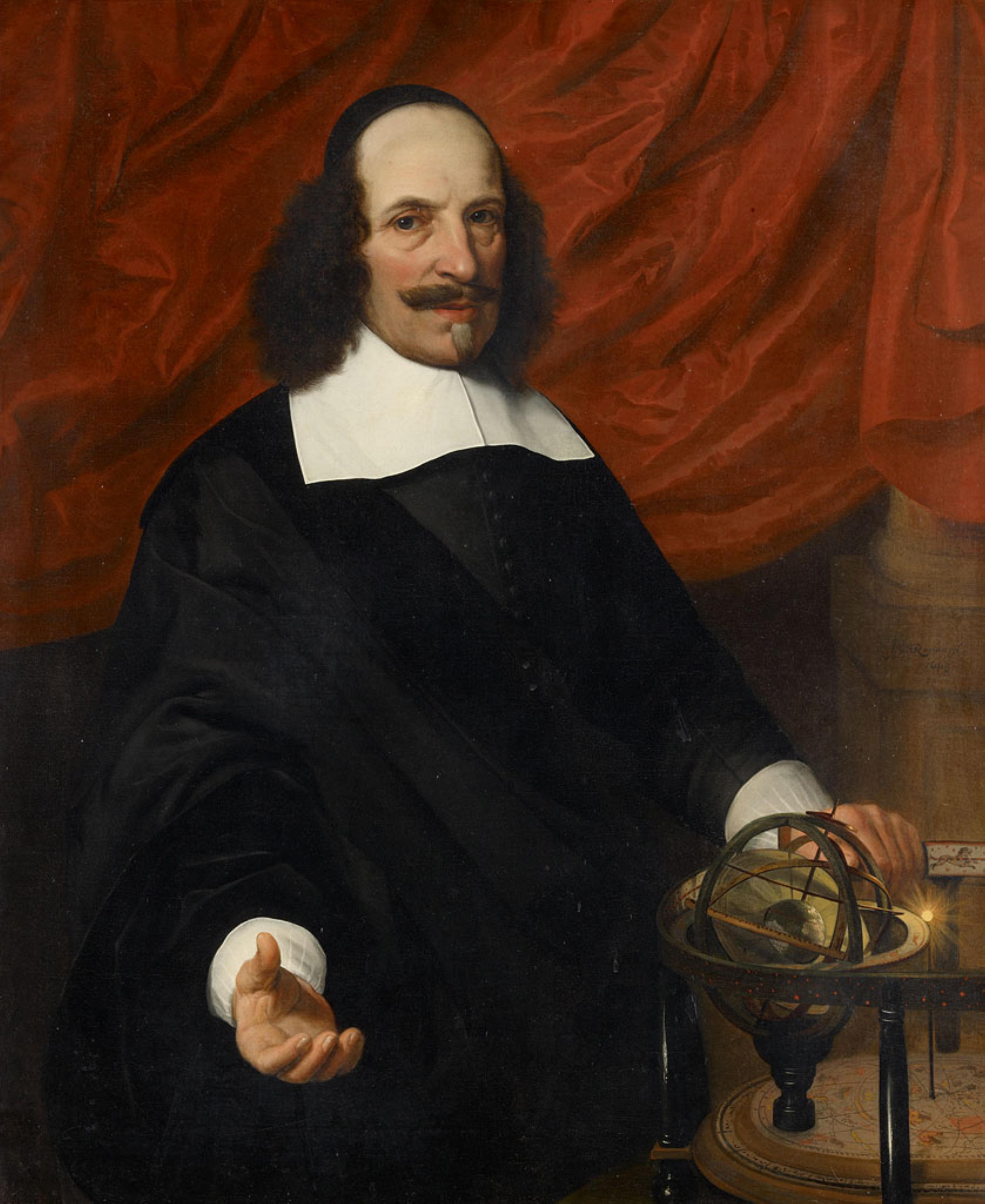
Dr Jan (Joan) Willemsz. Blaeu (Amsterdam, 1598/99 – there, 21 December 1673) was a Dutch printer, jurist, cartographer and publisher of renowned atlases. Blaeu – publisher of the celebrated Atlas Maior and city maps – worked closely with Rembrandt and other Amsterdam intellectuals. In the year the canvas was completed, three rare phenomena occurred: a total lunar eclipse, the spectacular conjunction of Saturn and Jupiter and other Saturnian conjunctions, and a partial solar eclipse. It is precisely those events, subtly disguised as flags, drums, musket flares and even feathers in fashionable hats, that rhythmically traverse the composition.
Thus the fluttering flag above corresponds to the constellation Perseus, the bearer’s drum depicts Libra, while the dramatic musket shot marks the moment of the solar eclipse. Even the distant planet Saturn – visible at the edge of the scene – and Jupiter’s moons are immortalised in paint, and Uranus also proves unequivocally to be depicted with its journey through Libra, well before its official discovery!
This website brings all those hidden layers to life. Through the interactive canvas you can zoom in on dozens of marked regions, where pop-ups reveal historical context, actual star-chart data and links to the free planetarium software Stellarium. Filter by constellations, planets or events, switch between Dutch and English, and share your favourite discovery with one click.
Whether you are an art lover, amateur astronomer or history enthusiast: embark on this stimulating quest full of hypotheses and discover how Rembrandt, Blaeu and the cosmos met on a canvas of 3.6 × 4.4 metres (169 × 140 inches). Look with fresh eyes – perhaps you will unravel the next celestial secret in the shadow of the Night Watch.
The first, indispensable exploration was carried out by Herbert Sanders Jr., who in his article (Epoque Magazine 23) recorded the positions of several planets and the most striking constellations in “The Night Watch”, though with many technical issues. His work formed the starting point for my own research, which brought to light yet-undiscovered constellations, the four Galilean moons of Jupiter, subtle nebulae, the discovery of designer Joan Blaeu and multiple representations and events. Together these findings show how deep the cosmic layer in Rembrandt’s masterpiece reaches and how a pioneering gaze opened the door to a complete astronomical narrative.
Zwaanshoek, 07-26-2025
Daniël Hendriks
<daan@hze.nl>
Tel: +316-222 37213
Discoveries made by Daniël Hendriks between 2025-07-14 and 2025-07-26:
- Heliocentric model of the planets
- The girl as the Sun, with the rooster, incl. proof
- Key constellations such as Orion, Ursa Major and Lacerta
- Polaris incl. relation to Ursa Major
- Moons of Jupiter
- The nebulae, such as the Pleiades, Hyades and Orion Nebula
- Right section as conjunctions incl. Saturn-Jupiter
- Evidence of Uranus as a planet with orbit through Libra
- King in the X-ray layer
- Important stars such as Betelgeuse, Sirius and Procyon incl. Winter Triangle
- Designer Dr J. Bleau
- Smaller constellations such as the Lions and a unicorn
- Correct position and completeness of the zodiac constellations
- Three lunar nodes and vernal points
- Small details such as the ball/rose and helmet for Taurus, incl. proof
- Tiny details such as stars or lines as dots
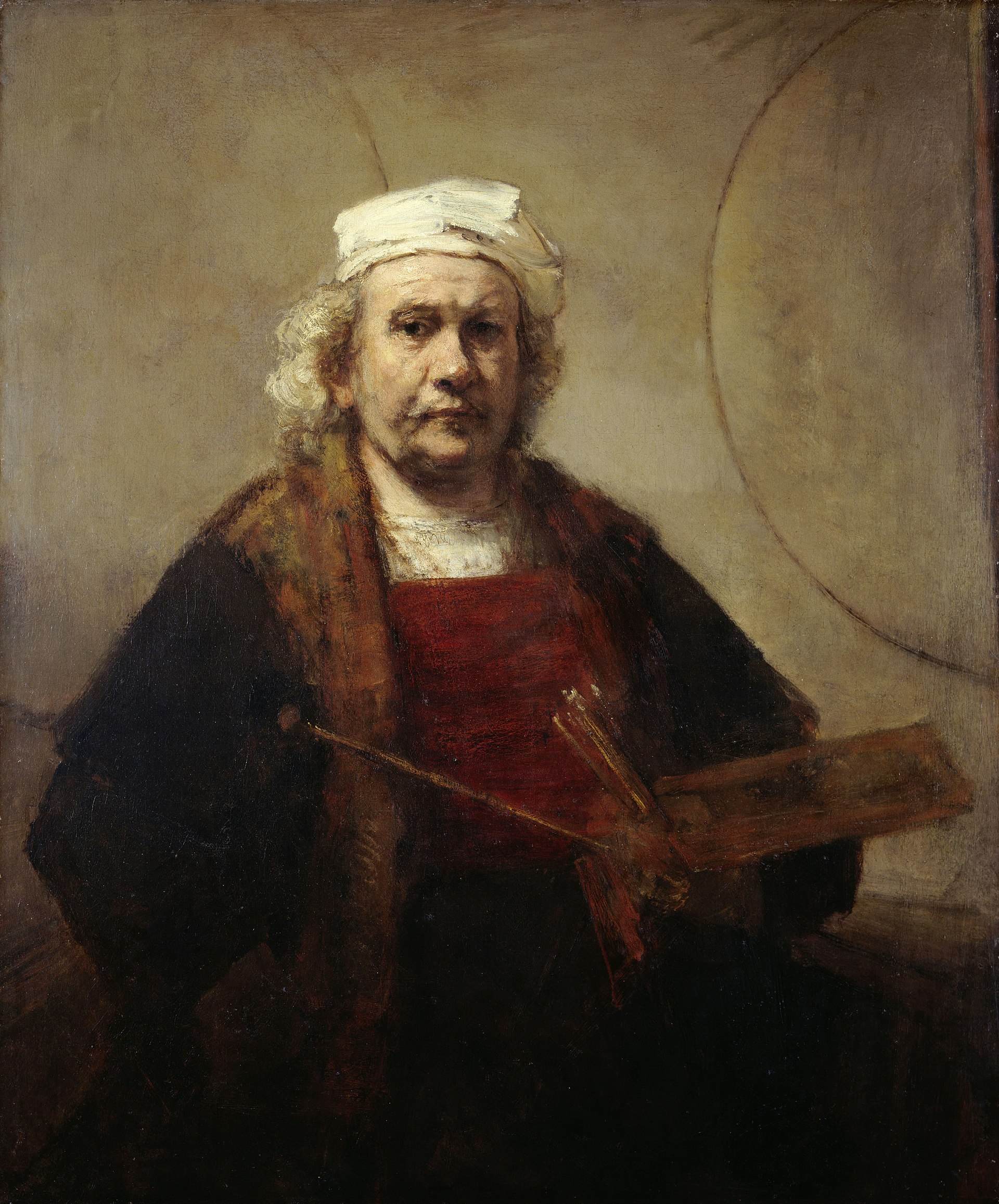
Rembrandt (Self-portrait c. 1665)
Blaeu (mirrored, 1663 by Jan van Rossum)